Blog › Company stamps and seals
Stamp or seal: the difference, and which one you are being asked for
9 September 2026 · Stamp-Seal
Make your stamp free · Browse 225 templates
Stamp vs seal is a question people ask because the two words get used as if they were one object with two names. They are not, and knowing which one is being asked for tells you what has to go on the mark. A stamp makes a statement about a document: received, paid, approved, certified a true copy. The wording is an action, usually with a date, and one organisation will own a dozen of them. A seal identifies the entity: this comes from us, and we stand behind it. There is normally one, it carries the registered name, and it changes only when the company does.
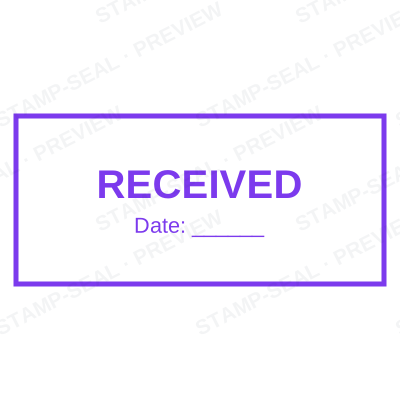
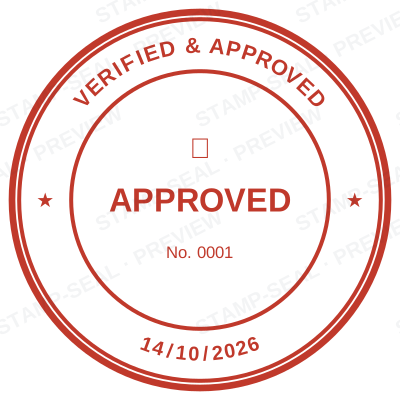
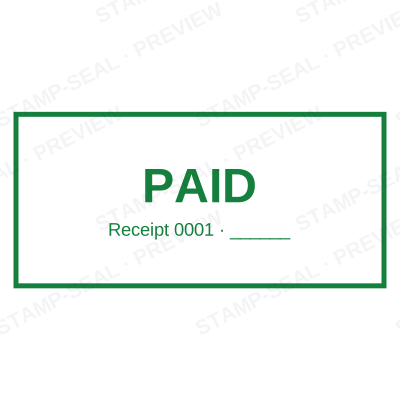
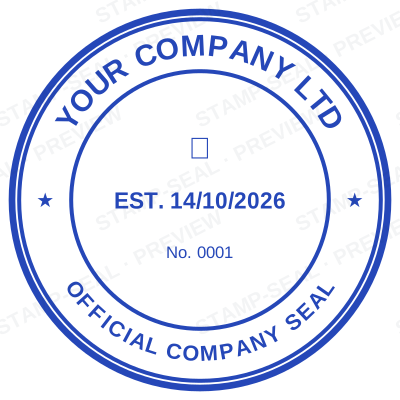
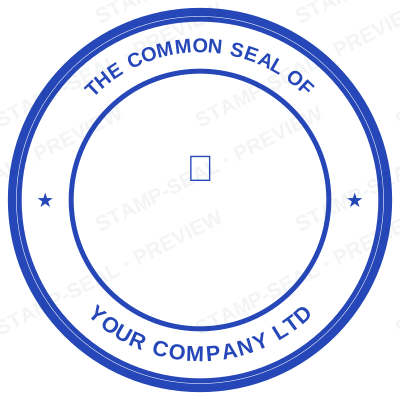
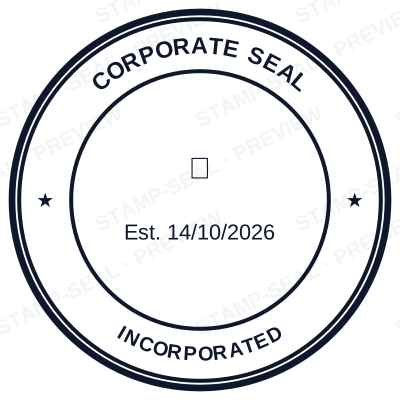
Open the stamp maker and start from any of these
At a glance
- What it says: a stamp says what happened. A seal says who this is from.
- How many you own: a dozen stamps is normal. One seal is normal.
- Shape: a stamp is often rectangular, because rectangles hold lines of text. A seal is almost always round, because that is what people read as a seal.
- Date: a stamp usually wants one. A seal does not, because a seal is not an event.
- When it changes: a stamp changes whenever the wording does. A seal changes only when the company does.
Stamp vs seal: telling which one you are being asked for
The request usually gives it away.
"Please stamp and return" almost always means an office stamp: received, approved, or the company's general mark with the date beside it.
"Affix the company seal", "under seal", or "the common seal of the company" means the entity mark. This shows up on share certificates, deeds, board resolutions, powers of attorney and some school or bank forms. If a form has a printed circle with the words "affix seal here", it wants the entity mark.
"Certified true copy" wants a specific stamp with wording that some institutions specify exactly, and often a signature line under it.
What goes on each
A seal, which is also what people mean by an official seal or a corporate seal, carries the registered company name exactly as registered, usually the registration number, sometimes the year of incorporation or the words COMMON SEAL. That is the corporate seal meaning in practice: a mark of identity rather than of action. It is almost always circular, because that shape is what people read as a seal. It stays constant.
A stamp carries the action word, the company or department name, and space for a date. It can be a rectangle, and rectangles are easier to read at small sizes.
Read more: What goes on a company stamp: the six lines that matter
The embosser confusion
There is a third object in the same conversation: the embosser, a hand press that leaves a raised impression with no ink. In several countries this is what "seal" means in daily speech. An embossed mark does not photocopy or scan well, which is why organisations that need copies to be readable use an inked seal or a digital one instead.
Does a company still need a physical seal?
In many places the legal requirement was removed years ago and the practice remained. Which is a real answer: the requirement may be gone, but the bank clerk, the registrar or the overseas client asking for one is not going to accept "it was abolished" as a substitute. A digital seal costs a few dollars and settles it.
Stamp or seal, once both are files
Digitally the two objects are the same kind of thing, a transparent image placed on a document, and the difference is entirely in what the mark says and how it is used.
Two consequences worth knowing:
A seal is fixed and a stamp is not. A seal file made once is the file forever. A stamp that records a date or a number should not be fixed at all: if the date is drawn into the picture it shows the day you designed it, on every document, for the rest of its life.
An embossed seal does not survive the trip. Scan a document carrying one and the raised impression mostly disappears, because there is no ink for the scanner to find. If documents leave your office as PDFs, the seal that works is an inked or digital one.
The practical answer
Most organisations end up with both: one seal, and a handful of stamps. Design them so they look related, the same ink colour and the same typeface, and a document carrying two of your marks reads as coming from one place.
Templates for both sit in the stamp maker, and the glossary defines the terms one by one. If you are not sure which of the wider family you need, types of stamps and what each one is for walks through all of them.
Questions people ask
What is the difference between a stamp and a seal?
A seal identifies the entity and normally carries the registered name; a stamp records an action, such as received or approved, and usually wants a date beside it. Most organisations own one seal and several stamps.
Does a company still need a common seal?
In many countries the legal requirement was removed years ago and the practice stayed. The requirement being gone does not help you when the bank, the registrar or an overseas client asks for one, which is why most companies keep a seal they are not obliged to have.
Can a digital seal replace an embossed one?
For documents that travel as files, a digital seal is the one that works: an embossed impression has no ink, so it mostly disappears when the page is scanned. Whether a specific recipient accepts it is their policy rather than a legal question, so ask when the document matters.
Which is used on a share certificate?
The seal, traditionally with two signatures beside it. A share certificate is exactly the kind of instrument the common seal survived for.
Every kind of stamp and seal
- Notary stamps and seals
- Rubber stamps
- Rubber stamp maker
- Self-inking stamps
- Office stamps
- Official stamps
- Company seals
- Corporate stamps and seals
- Company chops
- Seals for civil servants
- Justice and court stamps
- Legal and advocate stamps
- Certified true copy stamps
- Medical stamps
- Pharmacy stamps
- Veterinary stamps
- Engineer and architect seals
- Land surveyor seals
- Bank stamps
- School and principal stamps
- Teacher and marking stamps
- University and college seals
- Library stamps
- Inspection stamps
- Courier and logistics stamps
- Construction and site stamps
- Real estate stamps
- Hotel and restaurant stamps
- Church and charity seals
- Tender and bid stamps
- HR and payroll stamps
- Received and paid stamps
- Confidential and draft stamps
- Signature stamps
- Date stamps
- Custom band stamps
- Numbering stamps
- Address stamps
- Monogram stamps
- Wedding stamps
- Gift and craft stamps
- Art and logo stamps
- Wax and foil seals
- Stamp or seal, by profession